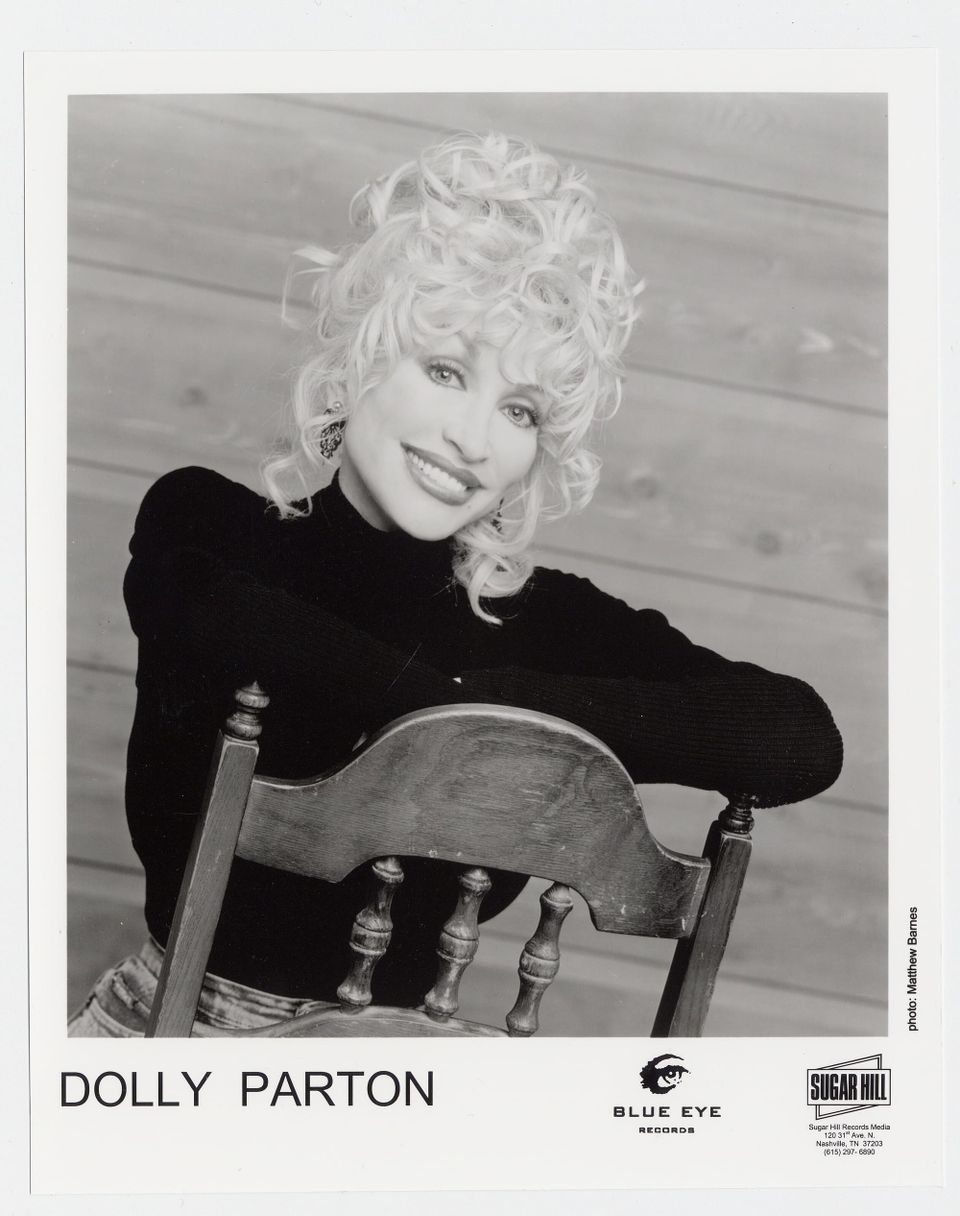
When Dolly Parton died a few weeks ago, I kept thinking of her in the context of the political moment. I have also, in the past weeks, been reading Derecka Purnell's important and insightful book Becoming Abolitionist: Police Protests, and the Pursuit of Freedom. I loved Dolly Parton; I didn't know her music well, I've listened more since her death, but growing up in the U.S. South, I was more a fan of her cultural presence than I was of her music. What was important to me about Dolly, was what I felt she represented. She struck me as an Ann Braden, Constance Curry, Mary King kind of southerner. She was, of course, a country music star, and it seems odd to compare her to these three activists and writers, who risked so much in the struggle for civil rights. Parton's contributions were different. The poet and writer, David Gates, made a post on Instagram after Parton's death that seemed to express my feelings about Dolly quite well: "it wouldn't be very inaccurate to call Dolly Parton apolitical. She has consistently expressed support for LGBTQ+ people and has made clear statements about the kind of world she wants to inhabit. Her politics are often expressed through the values she clearly chooses to embody rather than through endorsing politicians and campaign appearances."
The values that Dolly displayed represented the values of her Christian faith and the simple truths her experience in life made clear. It's not hard to contrast the lyrics of her songs with the worst kinds of values being modeled in American politics right now and while there's plenty of it going around, it's not even close to being the same on "both sides." Both the President and the Vice President make cruel and tasteless taunts like highschool bullies about their opponents. It's sad and repulsive. I know we're all a little numb to it now. I also know that in a context of war, genocide, economic distress, and real existential threats, the verbal bullying from politicians dulls in comparison to the abuse of power and the abhorrent behavior that accompanies their insults.
But this election, all elections, are a reflection of our values. They are a reflection of our sense of ourselves as a morally responsible people. There is a kind of throughline between how we treat each other, how we talk about each other, and the policies we want, the world we want to construct, and want our children to inherit. I couldn't help but notice in the headlines that some progressive leaders were walking back some of their statements made in 2019-2020. They've called it "the death of woke 1." Maybe this is just a reasonable shift towards governing. Now off the campaign trail, their idealism has to come up against the hard facts of representing a constituency broader than those who voted for them. They have to navigate within institutions with entrenched ways of being and the complications of governing introduces new realities that demand reassessment of positions. I get that, a lot of us do, there are understandable reasons for politicians, once elected, to moderate their views.
The symbol of this moderation however concerned the calls to "abolish the police," in the wake of the killing of George Floyd. Because I am situated where I am in society, in the body of a black queer man, I can't help but wonder what bearing that has on our positions of moral responsibility. I am not a politician and I don't have to represent the fears of a constituency, I have a different calling. I do choose however to honor the fears that I see expressed around me, not in a way that allows them to confine my life, but in a way that reflects my empathy and my desire for us all to share in a safer future. This empathy is a part of my own moral commitments derived in part from the wisdom of the spiritual tradition that it seems I share with Dolly. It's not hard for me to imagine why calls for the abolition of the police were frightening. If I thought the police were the only thing keeping me from violent crime, I would be frightened too.
What our political discourse wants to avoid is a discussion about the values behind the political pronouncements made in 2019-2020, an exploration of the moral place from which these statements come. That moral concern seems consistent with that same impulse, that same empathy that would cause me to honor the fears of those who cling to police. For those of us pulled over, threatened, and harassed by police since we were teenagers, for those who've had our sense of belonging to our country constantly undermined while trying to go about our lives, the backlash expressed to those calls for abolition, while not surprising, were and are hard pills to swallow. Are our fears not valid? The calls for abolition, as shocking as they may seem, were and are a reasonable and democratic response to the repeated killings of unarmed black people by police and vigilantes when one sees that the killing is unabated by reforms. The calls to abolish ICE follow a similar rationale. I know that the calls for abolition were weaponized by the right. They were caricatured and used to foment fear and division. I also know that they were attempting to invoke our imaginations. They were a plea for us to aspire to something more. It takes a lot of work to imagine and then create a different kind of future, a different kind of world. It takes moral searching. It takes honoring each other's fears and allowing ourselves to be transformed by the beauty of surprising relationships. The civil rights activist Ann Braden once said "Either you practice what you preach or you shut up about believing in democracy." Why did so many of the same politicians who express concern about our democracy, join in the chorus of demonization of activists, many of whom were young and full of idealism and a kind of desperate hope for a change. Is it wrong to yearn for something else? Why do we only allow our politicians to have impoverished imaginations that parrot our fears, why do we settle for such emaciated political speech? I want the "Light of the clear blue morning" that Dolly sang about.
The other day, I was walking into a grocery store with a friend in Atlanta. A police officer was standing at the entrance as is increasingly the case – policed grocery stores across the country. I confessed to my friend that I'm tired of offering a courteous and kind greeting to the police. I resent their presence and what it represents and to force a smile, feels insincere. My friend encouraged me to remember the person behind the role and what my kindness might mean to them in that moment. My friend knows the kind of person I’m trying to be and I accepted his gentle admonishment. I don't hate police officers. Our society sends them to do an impossible job in which they are subjected to crushing amounts of moral injury. I hate the dehumanizing place they've been put in and I hate the conditions of our society that make their presence seem necessary. I've had kind and generous interactions with many officers in my life, I've also had humiliating and infuriating ones. It's hard to reject an institution and love the people in it. It requires a kind of discipline, nuance, and grace that few of us can consistently manage. It's clear to me that there was a lot of dehumanizing political speech that reflects the outrage that many of us feel during what I guess is being called "woke 1." If that's the death of woke 1, then I welcome it. But if the death of "woke 1" means a retreat from wrestling with the hard questions of how we build a democracy that belongs to all of us, if it's a retreat from asking how we ensure that black people, immigrants, poor people of all races aren't senselessly brutalized and murdered, then no, I won't abide by that retreat.
Now Dolly may not have drawn the same conclusions about policing and what needs to be done, and the discussion about abolition is just one of the many conversations that I wish we could have better in our body politic. I feel confident however, that no matter the issue Dolly would be guided by a kind of moral center. She "had to go against all kinds of people through the years just to be [her]self" and if we disagreed I think she would hear me out with grace, I think she would not demonize my positions or act as though it's an endorsement of violent crime or an attempt to destroy the republic.
So Dolly, for the model you set for us, for the example you gave us of how to live together, of how to love each other and try to put on that "Coat of Many Colors," I give thanks for you and join a great chorus of those who will always love you.
Subscribe to the newsletter
Join me in conversation as I reflect on love, hope, healing, and the work of building the beloved community in disorienting times.

Member discussion